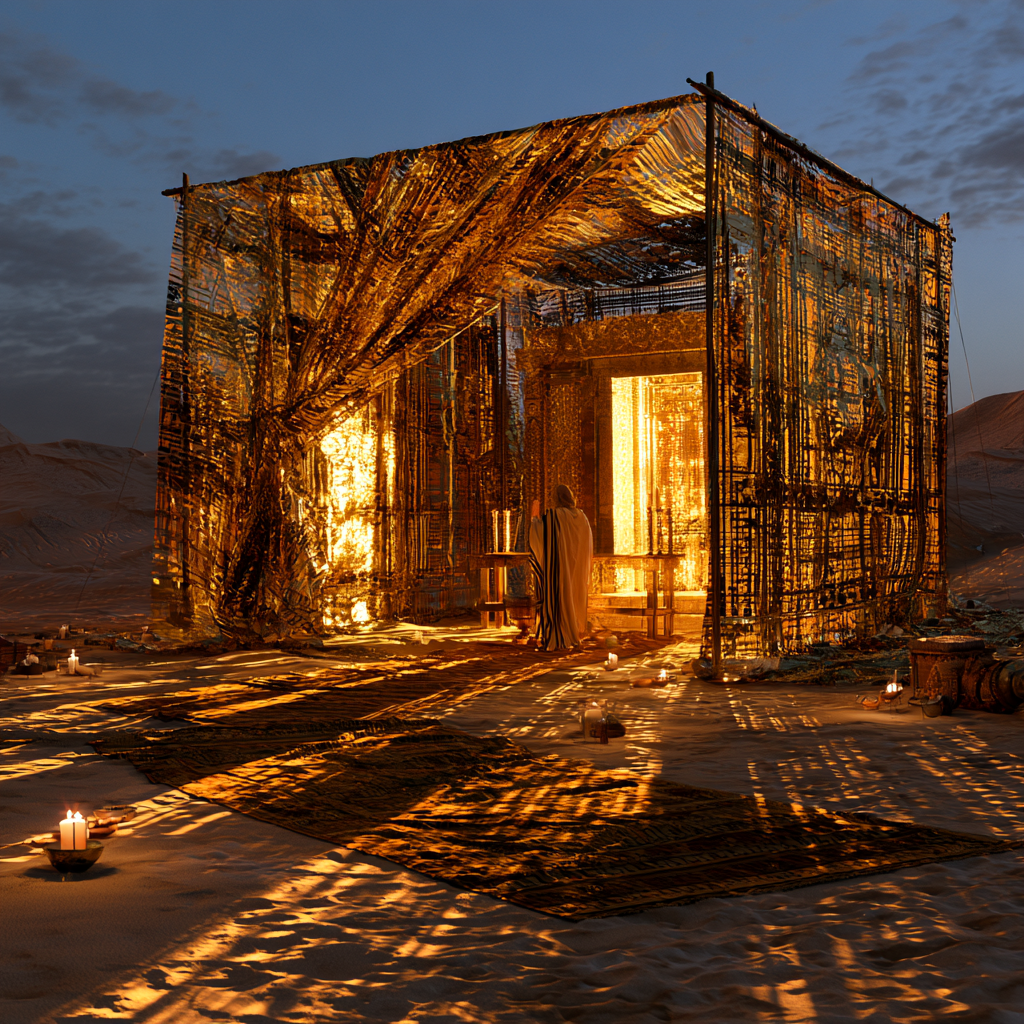
The Feast of Tishri is one of those Masonic observances that can seem distant until we stop looking at it as a historical event and begin looking at it as a human journey.
At first glance, it is a celebration connected to an ancient Jewish festival, the dedication of King Solomon’s Temple, and the traditions of the Scottish Rite. All of that is true.
But beneath the history is something much closer to home.
The Feast of Tishri is about freedom, uncertainty, labor, gratitude, responsibility, and the question every Mason should eventually ask himself:
What has my labor actually built?
What Is Tishri?
Tishri, also commonly spelled Tishrei, is a month in the Hebrew calendar. It is counted as the seventh month from Nisan, but it also marks the beginning of the Jewish civil year.
Several important Jewish holy days occur during Tishri, including Rosh Hashanah, Yom Kippur, Sukkot, and Simchat Torah.
The phrase “Feast of Tishri” is not the biblical name of one particular holiday. It is the name Scottish Rite Masonry uses for an observance built primarily around Sukkot, the Feast of Booths or Tabernacles.
Sukkot begins on the fifteenth day of Tishri and lasts seven days. Its name comes from the Hebrew word sukkah, meaning a booth or temporary shelter.
The Israelites were commanded to live in these simple shelters during the feast so future generations would remember that their ancestors had once lived in temporary dwellings after being delivered from Egypt.
That detail matters.
The booth was not merely a decoration. It was a physical reminder that freedom did not immediately produce comfort.
The Israelites had escaped bondage, but they had not yet arrived at the Promised Land. They were free, but they were still wandering. They had left Egypt behind, but they had not completed the journey.
That may be the first great lesson of the Feast of Tishri.
Freedom Is Only the Beginning
We often talk about freedom as though it is the final destination.
It is not.
Freedom removes the chains. It does not tell a man what to do with his hands once the chains are gone.
The Israelites were no longer under the whip of Egypt, but they still had to learn how to live, govern themselves, trust God, and become a people capable of possessing what had been promised to them.
The same is true in the life of a Mason.
A man may enjoy political liberty, financial independence, and freedom of movement while remaining completely controlled by fear, anger, prejudice, appetite, pride, or ambition.
He may have no visible master while still being ruled from within.
That is why self-government matters.
The free man must learn to restrain himself without an overseer standing behind him. He must learn to act morally when nobody is forcing him to do so. He must develop the character to use liberty responsibly.
The wilderness, then, is not simply a place on an ancient map.
It is the unfinished territory between being released from what held us and becoming worthy of what lies ahead.
Most of us spend more time there than we care to admit.
The Booth and the Lesson of Impermanence
The sukkah was temporary by design.
It offered shelter, but not the illusion of permanence. It protected the traveler while reminding him that he had not yet arrived.
There is a useful lesson in that for modern men.
We spend much of our lives trying to build things that feel permanent: careers, reputations, homes, bank accounts, titles, positions, and institutions.
Then life reminds us that almost everything we possess is temporary.
A change in health, fortune, employment, or circumstance can quickly expose how fragile our sense of security really is.
The booth is not a command to reject achievement. It is a warning against confusing temporary shelter with the final destination.
It reminds us to remain humble when life is going well and hopeful when it is not.
The man in the booth knows he is still traveling.
The Harvest and the Duty of Gratitude
The Feast of Booths was also a harvest festival.
It took place after the produce had been gathered from the fields, threshing floors, and winepresses. The work had been done. The harvest had been collected. The people were commanded to rejoice and give thanks for what they had received.
This makes the Feast of Tishri more than a remembrance of hardship.
It is also a celebration of abundance.
But biblical gratitude was never intended to become private self-congratulation.
The celebration was to include sons and daughters, servants, religious workers, resident foreigners, orphans, and widows. Those who had received blessings were expected to share the celebration with people who might otherwise have been left outside it.
That gives the harvest a moral dimension.
The question is not simply, “What have I earned?”
The better question is, “What responsibility came with it?”
A man’s harvest may include money, influence, experience, knowledge, authority, relationships, or opportunity. Whatever form it takes, abundance creates an obligation.
Success should make us more useful, not merely more comfortable.
The Feast of Tishri gives the Mason an opportunity to examine the results of his labor. Has his work benefited only himself? Has he remembered the stranger, the widow, the orphan, and the man who has not yet found his footing?
Gratitude that never becomes generosity is incomplete.
Solomon’s Temple and the Seventh Month
The Feast of Tishri is also connected to the dedication of King Solomon’s Temple.
The books of Kings and Chronicles describe the elders and leaders of Israel gathering in Jerusalem so the Ark of the Covenant could be brought into the completed Temple. This assembly took place during the festival of the seventh month, understood as the Feast of Booths.
The dedication of the Temple and the autumn festival were therefore celebrated together.
That connection creates one of the strongest symbolic contrasts in the entire observance.
On one side stands the booth: temporary, fragile, simple, and associated with wandering.
On the other stands the Temple: permanent, ordered, completed, and dedicated to sacred purpose.
The booth belongs to the wilderness.
The Temple belongs to arrival.
The booth reminds us of dependence.
The Temple reminds us of responsibility.
One teaches humility. The other demands dedication.
From Temporary Shelter to Sacred Structure
It would be easy to read the movement from booth to Temple as a simple story of improvement.
First, people lived in primitive shelters. Later, they built something magnificent.
But the symbolic lesson is deeper than architecture.
The Temple was not important merely because it was larger, stronger, or more beautiful than the booth. It mattered because it was dedicated.
Its construction had a purpose beyond the structure itself.
That distinction matters in Masonry.
A man may spend years building a successful life without ever asking what that life has been dedicated to.
He may become disciplined, educated, respected, and prosperous. He may build an impressive personal Temple.
But impressive construction is not the same as consecrated labor.
The real question is whether the structure serves anything higher than the builder.
The Temple can therefore be understood as an image of moral character. Its stones are habits. Its measurements are principles. Its strength is integrity. Its beauty is the harmony between what a man claims to believe and how he actually lives.
A Temple is not completed because the walls are standing.
It is completed when it is placed in service to a worthy purpose.
The Scottish Rite Observance
Current Scottish Rite accounts state that the Supreme Council of the Southern Jurisdiction designated the fifteenth day of Tishri as a feast day of the Lodge of Perfection in 1866.
Today, the Feast of Tishri remains an important Scottish Rite observance.
Its ceremonies commonly include shared meals, formal reflections, fellowship, and a ceremony of toasts. It celebrates themes such as freedom, brotherly love, gratitude, rededication, and the peaceful fellowship of mankind.
These are not themes added randomly to an ancient festival.
They grow naturally from the story.
Freedom comes from the Exodus.
Humility comes from the booth.
Thanksgiving comes from the harvest.
Dedication comes from the Temple.
Brotherhood comes from the common table.
Together, they form a coherent moral journey.
The Meaning of the Common Table
The feast was always meant to be communal.
That is important because fellowship is easy to praise in theory and difficult to practice in reality.
At the common table, men bring their differences with them. They do not stop having different occupations, political opinions, incomes, backgrounds, personalities, or histories.
The table does not erase those differences.
It places them under a higher obligation.
Men who might never have met under ordinary circumstances sit together in gratitude and reflection. For a moment, status gives way to fellowship. Personal success is placed beside shared responsibility.
The table reminds us that brotherhood is not based on sameness.
It is based on commitment.
A feast that welcomes only the prosperous, influential, or comfortable would miss the lesson entirely. The original celebration included the outsider, the servant, the orphan, and the widow.
A Masonic observance faithful to that spirit should lead us toward hospitality, generosity, and concern for those who might otherwise remain outside the circle.
Brotherhood is not merely enjoying the company of men who already belong.
It is learning to widen the table.
What Has Your Labor Built?
The Feast of Tishri reaches from bondage to freedom, from wandering to settlement, from planting to harvest, and from construction to dedication.
It begins with people living beneath temporary branches and ends with a nation gathered around a completed Temple.
But the real movement is inward.
The wilderness asks whether we have learned to govern ourselves.
The booth asks whether we remember how temporary our comforts are.
The harvest asks whether our blessings have made us grateful and generous.
The Temple asks whether our lives have been organized around a worthy purpose.
The common table asks whether our understanding of brotherhood extends beyond ceremony.
This is why the Feast of Tishri is more than a remembrance of something that happened in the distant past.
It is an examination of the present.
Every man is building something.
He is building habits, relationships, a reputation, a family, a career, a legacy, and a character. Stone by stone, choice by choice, he is constructing the structure in which his values will eventually be seen.
The question is not whether we have labored.
The question is whether our labor has produced something worthy of dedication.
Leave a Reply