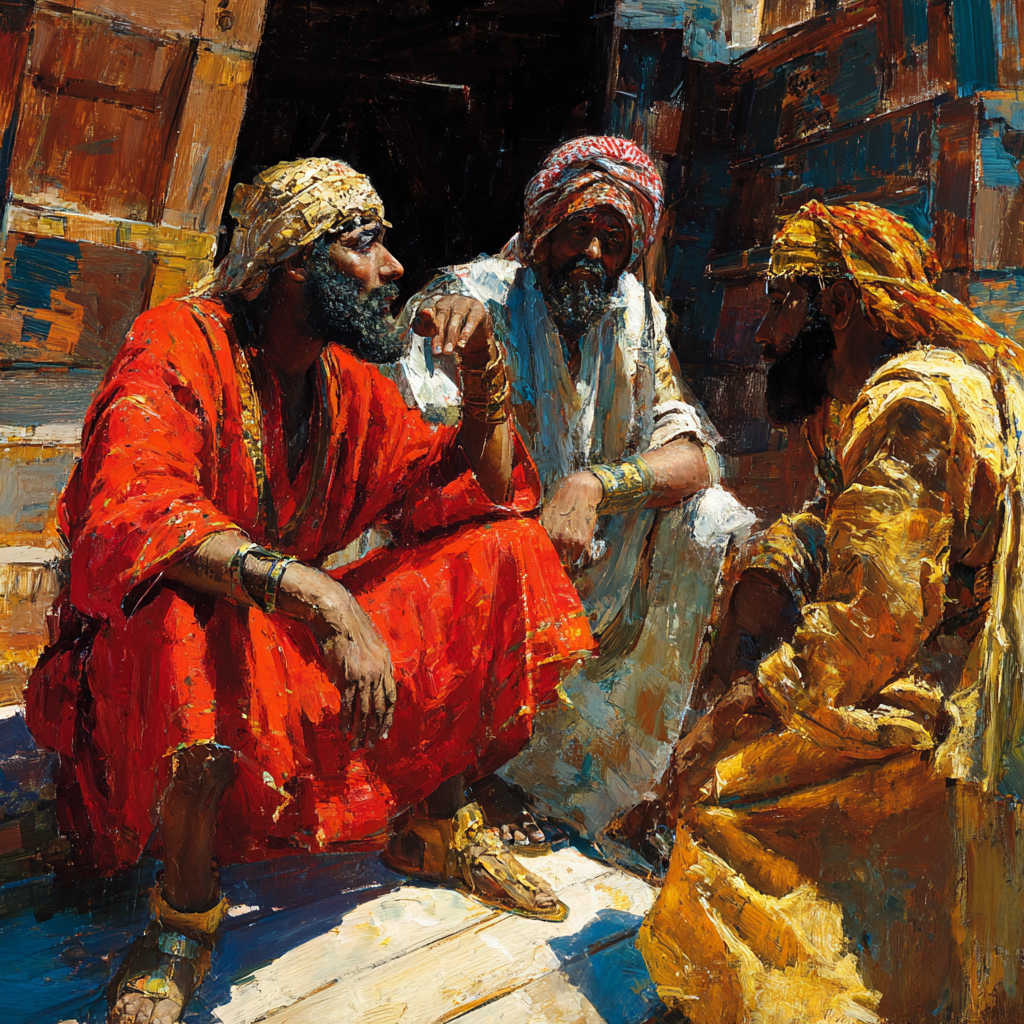
One of the most intriguing yet overlooked details in Masonic ritual appears in the Master Mason degree, where the guys who did the thing attempt to “escape to Ethiopia through the port of Joppa.” [parpahrased on purpose]. For generations, this specific geographical reference has puzzled Masonic scholars and members alike. Why Ethiopia? Why not simply “a distant land” or any other remote destination? This choice was far from arbitrary—it represents a sophisticated symbolic system that draws upon biblical tradition, classical literature, and the worldview of 18th-century ritualists to create multiple layers of meaning within the ceremony.
The selection of Ethiopia as ‘the bad guys” intended destination carries profound biblical and historical significance that would have been immediately recognizable to the educated Christians who developed Masonic ritual. In biblical literature, Ethiopia (known as “Cush” in Hebrew) represented the southernmost extent of the known world—a land of both refuge and exile, wealth and mystery. The ancient kingdom of Kush, with its capital at Meroë, was portrayed in scripture as a powerful realm that would eventually acknowledge divine sovereignty, while also serving as a symbol of the extremes of human habitation. Classical authors like Herodotus further developed this symbolism, describing Ethiopia as the ultimate boundary of civilized society, inhabited by people of great justice and piety, yet representing separation from familiar civilization.
What makes this reference particularly fascinating is that it appears to be an American innovation rather than an original component of English Masonic ritual. Early English exposures from the 1730s and 1760s make no mention of Ethiopia in connection with those unsavory fellow’s escape, suggesting that American Freemasons of the 19th century deliberately added this geographical detail to enhance the symbolic narrative. By the time of Malcolm C. Duncan’s widely circulated “Masonic Ritual and Monitor” (1866), the Ethiopia reference had become firmly established in American Masonic tradition, complete with scenes of the ruffians meeting a sea captain preparing to sail to this distant land.
The symbolic geography created by this ritual detail is remarkably sophisticated, establishing a spiritual map that moves from sacred center to ultimate exile. Jerusalem, site of Solomon’s Temple, represents the center of divine wisdom and sacred community. Joppa, the port of departure, serves as the threshold between sacred and profane space—the same port through which materials for the Temple were imported now becomes the escape route for those who [did a very bad thing]. Ethiopia, the intended destination, symbolizes complete separation from divine presence and sacred community, representing not merely physical distance but spiritual degradation—a journey from light into darkness, from wisdom into exile.
The Ethiopia reference also reinforces one of the Master Mason degree’s central teachings about the inescapability of divine justice. In biblical tradition, Ethiopia was often portrayed as beyond the normal reach of earthly authority but never beyond divine oversight. The ritual’s narrative structure demonstrates this principle: despite planning to flee to the most distant refuge they could imagine, the bad guys are ultimately discovered and brought to justice. This creates a powerful paradox—they sought to escape to a land itself associated with ancient wisdom and divine sovereignty, revealing their fundamental misunderstanding of both justice and wisdom. The sophisticated use of this symbolic geography demonstrates the careful thought that went into the ritual’s construction, creating a symbolic puzzle that continues to invite contemplation of deeper spiritual truths about accountability, exile, and the ultimate impossibility of escaping the consequences of betraying sacred trust.